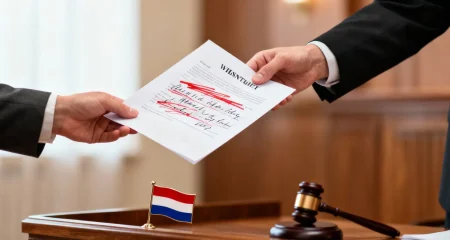
Under Article 1:266 of the Dutch Civil Code (BW), the district court can terminate a parent’s authority (beëindiging van het gezag) if the child is seriously threatened in its development and the parent cannot take responsibility within an acceptable period, or if the parent abuses the authority. A parent cannot apply for this against the other parent: under Article 1:267 BW only the Child Care and Protection Board (Raad voor de Kinderbescherming), the public prosecutor or, in some cases, a carer who has raised the child for at least a year can make the application.
A parent who wants sole authority because joint authority no longer works uses a different procedure, under Article 1:251a or 1:253n BW. Below we explain both routes, the grounds, the procedure and how authority can be restored; related topics are covered in our មគ្គុទ្ទេសក៍ច្បាប់គ្រួសារហូឡង់.
តារាងមាតិកា
What does parental authority mean under Dutch law?
អំណាចឪពុកម្តាយ (ouderlijk gezag) is the power and duty to care for and raise a minor child and to represent it in legal matters. It covers decisions on where the child lives, which school it attends and which medical treatment it receives, so a passport application or a school enrolment needs the consent of everyone who holds authority.
Where both parents hold joint authority, they take important decisions together; where one parent holds it alone, that is sole authority (eenhoofdig gezag). A parent without authority keeps the right to contact, the duty to contribute to the child’s upkeep and, under Article 1:377c BW, the right to request important information about the child from professionals such as schools and doctors.
Authority also has consequences for liability. Under Article 6:169 BW, the person who exercises parental authority or guardianship is liable for damage caused by a child under fourteen; for more on liability, see our page on when you are ទទួលខុសត្រូវចំពោះការខូចខាត.
Who holds parental authority, and since when?
The mother who gives birth has authority automatically, and a parent married to her or in a ភាពជាដៃគូដែលបានចុះឈ្មោះ with her has joint authority from birth. Since 1 January 2023, Article 1:251b BW gives the mother and the person who acknowledges the child joint authority by operation of law, without a court application.
Acknowledgements made before 1 January 2023 do not fall under this rule; in those cases the parents still have to register joint authority themselves in the authority register kept by the court. Our article on ការទទួលស្គាល់កុមារនៅប្រទេសហូឡង់ explains where acknowledgement and authority diverge.
If the mother refuses to cooperate where that is still required, the other parent can apply to the district court under Article 1:253c BW. The court only refuses joint authority if there is an unacceptable risk that the child will become trapped or lost between the parents without improvement in the foreseeable future, or if refusal is otherwise necessary in the child’s interest.
Which two procedures are often confused?
Most questions about “deprivation of parental authority” concern one of two very different procedures. The difference decides who can start the case and what must be proved.
Termination of authority as a child protection measure
Termination under Article 1:266 BW protects a child from a parent who cannot provide safe care. Since 1 January 2015 it has replaced the old measures of អូនថេហ្វហ្វីង និង ontzetting. Only the parties named in Article 1:267 BW can apply, and the measure is in principle lasting.
Change from joint to sole authority between parents
A change from joint to sole authority is a private dispute between two parents, and either parent can start it. For parents who were married or in a registered partnership the basis is Article 1:251a BW; for parents who were never married it is Article 1:253n BW, which applies the same test. Losing joint authority in this procedure is not a finding that a parent is unfit, only that joint decision-making is not working.
On what grounds can the court terminate authority?
Article 1:266 BW contains two grounds, and one is enough: a serious threat to the child’s development combined with the parent’s inability to take responsibility within an acceptable period, or abuse of authority by the parent.
The acceptable period is measured from the child’s point of view: how long a child of this age can be left uncertain about where it will grow up. For a very young child that period is short, often a matter of months, so a parent who is genuinely working on recovery but needs years may still fall outside it.
In practice termination usually follows lighter measures that did not bring enough change. A supervision order (ការនិយាយស្តីអំពីការនិយាយ ...) under Article 1:255 BW places the family under the guidance of a certified youth care institution, and under Article 1:265b BW the juvenile court can authorise out-of-home placement. When those measures have run their course and the child needs certainty, the Board considers an application under Article 1:266 BW.
តើនីតិវិធីដំណើរការយ៉ាងដូចម្តេច?
The procedure starts with a petition to the district court where the child has its habitual residence. The parent whose authority is at stake is summoned and can be represented by a lawyer; the state-funded legal aid scheme (gefinancierde rechtsbijstand) exists for parents with a low income.
Under Article 809 of the Dutch Code of Civil Procedure (Rv), the court gives a child of twelve or older the opportunity to give its view, and it can also hear younger children. The Board’s investigation report is usually the central document, so a well-argued written response to that report is the most important step a parent can take.
If the court terminates authority and the other parent does not exercise authority alone, it appoints a guardian under Article 1:275 BW. If foster carers who have raised the child for at least a year made the application, they have preference as guardian. The parent remains the legal parent, the child remains an heir, and contact can continue unless the court restricts it.
Can authority be restored?
Yes. Under Article 1:277 BW, the court can restore a parent’s authority on request if restoration is in the child’s interest and the parent can bear responsibility for care and upbringing on a lasting basis.
Under Article 1:278 BW, the Board can also make the request, and the court can set a trial period of at most six months during which the child lives with the parent. The bar is high, because another change of home can itself harm the child.
When does the court change joint authority into sole authority?
Under Articles 1:251a and 1:253n BW, the court can give authority to one parent if there is an unacceptable risk that the child will become trapped or lost between the parents and no sufficient improvement is expected in the foreseeable future, or if a change is otherwise necessary in the child’s interest. The first limb is known as the “trapped between parents” test (klemcriterium), and the threshold is high.
Poor communication between parents is not enough on its own, and neither is the absence of contact between the child and one parent. What carries weight is conduct that makes joint decisions impossible or unsafe: harmful behaviour towards the child, conduct towards the other parent that makes consultation unreasonable, long-term unreachability, blocking decisions the child urgently needs, or drawing the child into a loyalty conflict.
The court also looks at the applicant. A parent who has not tried mediation or a parenting coordinator, or who has obstructed contact, weakens their own case. Our article on នៅពេលដែលការលែងលះដែលមានជម្លោះខ្ពស់ក្លាយជាបញ្ហារបស់តុលាការកុមារ covers the point where such disputes turn into child protection cases.
When does parental authority end without a court order?
Authority ends by law when the child turns eighteen. Under Article 1:253ha BW, a minor mother of sixteen or seventeen can ask the juvenile court to declare her of age, so that she can hold authority over her own child.
If both parents die, or the surviving parent does not hold authority, the court appoints a guardian. Under Article 1:31 BW, nobody can marry in the Netherlands before the age of eighteen, so the old rule that marriage ends authority over a minor has no practical meaning for marriages concluded here.
What does the court weigh, and what not?
The standard in every procedure is the interest of the child, informed by the right to family life in Article 8 of the European Convention on Human Rights. The court looks at the child’s age and development, its bonds with each parent, the stability each parent offers, the history of care and, from the age of twelve under Article 809 Rv, the child’s own view.
The court does not punish. Authority is not taken away because a parent did not pay child maintenance or behaved badly towards the other parent; those grievances have their own remedies, such as enforcement of a maintenance order or a court-set contact arrangement. A well-drafted ផែនការមេ often resolves more of the conflict than a fight over authority.
What should you check as a parent who wants a change of authority?
- Which procedure fits: a change between parents under Article 1:251a or 1:253n BW, or a child protection concern that belongs with the Board?
- Do you have a dated record of decisions the child needed and did not get, such as school enrolment, medical treatment or a passport?
- Have you tried consultation, mediation or a parenting coordinator, and can you show it?
- Have you respected the existing contact arrangement yourself?
- If you are worried about the child’s safety: have you reported it to Veilig Thuis or the Board?
What should you check as the parent whose authority is at stake?
- Which ground does the petition rely on: Article 1:266 BW, or the trapped-between-parents test of Article 1:251a or 1:253n BW?
- Have you received and read the Board’s report, and do you respond to it in writing before the hearing?
- Can you show concrete steps you have taken, such as accepted help under a supervision order?
- Is your child twelve or older, and has the court invited it to give its view under Article 809 Rv?
- Are there documents, such as reports from school or youth care, that support your capacity to care for the child?
What can we do for you with a parental authority case?
របស់យើង មេធាវីគ្រួសារ advise parents, carers and guardians at each stage; more on our approach is under ជំនួយផ្នែកច្បាប់សម្រាប់បញ្ហាអាជ្ញាធរមាតាបិតា. In practice, we:
- assess which procedure fits your situation and what an application realistically requires;
- draft and file a petition for sole authority or joint authority;
- draft a written response to the Board’s report before the hearing;
- represent you at the hearing before the district court and on appeal;
- prepare a request to restore authority under Article 1:277 BW, including a trial period;
- draft a parenting plan or a contact arrangement as an alternative to a dispute about authority.
សេចក្តីសង្ខេប
- Termination of authority under Article 1:266 BW is a child protection measure; only the Board, the public prosecutor or a long-term carer can apply.
- A parent who wants sole authority uses Article 1:251a or 1:253n BW, with the high “trapped between parents” threshold.
- Since 1 January 2023, acknowledgement of a child gives joint authority by law under Article 1:251b BW.
- Authority can be restored under Article 1:277 BW, with a trial period of at most six months under Article 1:278 BW.
- Under Article 809 Rv, the court gives a child of twelve or older the opportunity to give its view.
សំណួរដែលគេច្រើនសួរ
Can I apply to have the other parent’s authority terminated?
No. Under Article 1:267 BW only the Child Care and Protection Board, the public prosecutor or, in some cases, a carer who has raised the child for at least a year can apply. A parent can ask for sole authority under Article 1:251a or 1:253n BW, or report safety concerns to Veilig Thuis or the Board.
Does a parent without authority lose all contact with the child?
No. A parent without authority keeps the right to contact and, under Article 1:377c BW, can ask professionals such as schools and doctors for important information about the child.
Do unmarried parents get joint authority automatically?
Since 1 January 2023, yes, if the child is acknowledged: Article 1:251b BW gives the mother and the acknowledging parent joint authority by law. For acknowledgements made before that date, the parents must still register joint authority themselves.
Can authority be restored after termination?
Yes. Under Article 1:277 BW the court can restore authority if that is in the child’s interest and the parent can bear responsibility on a lasting basis. Under Article 1:278 BW the court can set a trial period of at most six months.