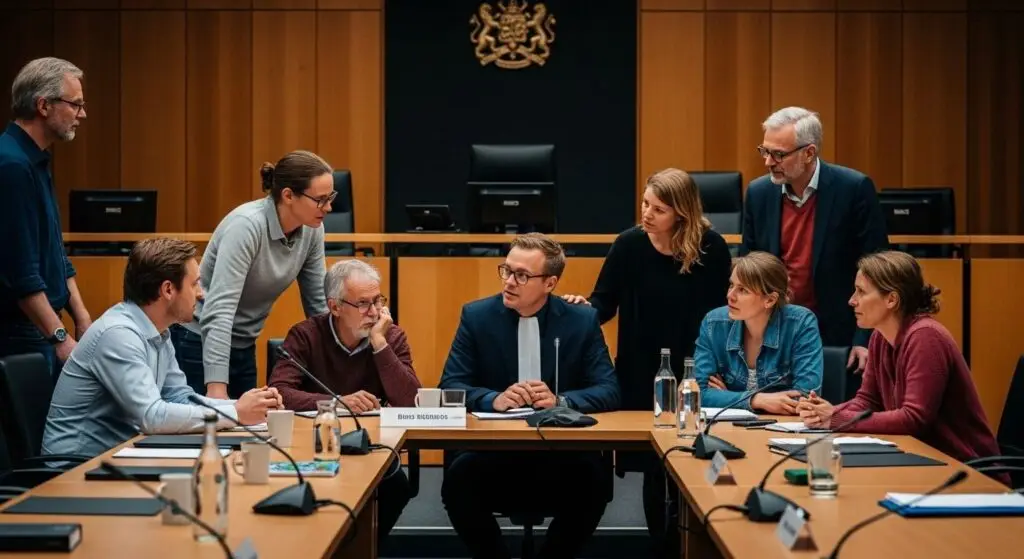
Activists in the Netherlands can sue multinationals in the civil courts, mostly on the basis of the unwritten duty of care in Dutch tort law, and Dutch courts have accepted that large companies have their own responsibility to limit dangerous climate change. The most important exception to the early headlines: in the Shell case, the Court of Appeal of The Hague ruled in November 2024 that a court cannot impose a specific reduction percentage, and the case is now before the Supreme Court.
តារាងមាតិកា
On what legal basis can activists sue a company?
Most claims are based on the unlawful act (onrechtmatige daad) under Article 6:162 of the Dutch Civil Code (BW). The claimants argue that the company breaches an unwritten standard of care by contributing to dangerous climate change.
To fill in that standard of care, courts take into account the rights to life and to respect for private and family life under Articles 2 and 8 of the European Convention on Human Rights (ECHR), international climate agreements such as the Paris Agreement, soft law such as the UN Guiding Principles on Business and Human Rights and the scientific consensus on climate change.
Environmental organisations can bring these cases as a collective action under Article 3:305a BW. Since 2020, stricter admissibility requirements apply to such collective claims, for example on representativeness, governance and the link with the Netherlands.
Which types of claims do activists bring?
Climate cases against companies fall into a few categories. The main ones are claims to reduce emissions, claims against misleading environmental claims (greenwashing) and claims about transparency and reporting.
Emission cases aim for a court order requiring a company to cut its emissions. Greenwashing cases rely on the rules on unfair commercial practices in Article 6:193a and following BW. Reporting cases focus on what a company discloses about its climate impact and plans, an area where EU sustainability reporting rules are increasingly relevant.
What did the Urgenda case decide?
In the Urgenda case, the Dutch Supreme Court held on 20 December 2019 that the Dutch State had to reduce greenhouse gas emissions by at least 25 percent by the end of 2020, compared with 1990 (ECLI:NL:HR:2019:2007). The court based this on Articles 2 and 8 ECHR.
Urgenda was a case against the government, not against a company. It is nevertheless the foundation for later corporate cases, because it confirmed that Dutch courts can assess climate policy against human rights obligations and that dangerous climate change is a real and immediate threat.
What happened in the Shell climate case?
Milieudefensie and other organisations claimed that Shell must reduce its CO2 emissions. On 26 May 2021, the District Court of The Hague ordered Shell to reduce the emissions of the Shell group, including those of its suppliers and customers, by net 45 percent by 2030 compared with 2019 (ECLI:NL:RBDHA:2021:5339).
Shell appealed. On 12 November 2024, the Court of Appeal of The Hague overturned the order (ECLI:NL:GHDHA:2024:2099). The court confirmed that Shell, like other companies, has an obligation to contribute to combating dangerous climate change, but held that a civil court cannot establish that Shell must reduce its emissions by 45 percent or any other specific percentage.
On emissions from the use of its products by customers (scope 3), the court of appeal found that there is not enough consensus on a specific reduction percentage for an individual company. The court did note that investments in new oil and gas fields may conflict with the goals of the Paris Agreement, although it did not rule on that question.
Milieudefensie has appealed to the Supreme Court (Hoge Raad). The hearing took place on 22 May 2026 and, at the time of writing, the Supreme Court has not yet ruled. The judgment of the Court of Appeal is published on rechtspraak.nl.
What did the KLM greenwashing case decide?
On 20 March 2024, the District Court of Amsterdam held that 15 of the 19 statements by KLM that had been challenged were misleading (ECLI:NL:RBAMS:2024:1512). The case was brought by the Fossielvrij foundation on the basis of the rules on unfair commercial practices.
The court found, among other things, that vague terms such as “more sustainable” and statements about sustainable aviation fuel and reforestation projects gave consumers an overly positive picture of the environmental impact of flying. KLM had already stopped the campaigns, so the court did not grant the further claims for rectification.
The lesson for companies is clear. Environmental claims in advertising must be specific, accurate and supported by evidence. A general promise of sustainability, without concrete substantiation, is a legal risk.
What does the Dutch Climate Act require?
The Dutch Climate Act (Klimaatwet) sets the national targets: a 55 percent reduction in greenhouse gas emissions by 2030 compared with 1990, and net zero emissions by no later than 2050. Under Article 2 of the Act, these targets are addressed to the government.
The Act does not directly impose obligations on individual companies. It requires the government to adopt a climate plan, to report on progress and to take the targets into account in its policy. Companies are affected through the specific measures that follow from it, such as rules on emissions, energy and reporting.
In litigation, the national targets play an indirect role. Courts use them, together with international agreements and scientific reports, to determine what can reasonably be expected of a company under the duty of care.
How do Dutch courts approach these cases?
Dutch courts are willing to assess climate claims, but they do not make policy; they decide whether specific conduct is unlawful under Article 6:162 BW towards specific claimants. That explains the difference between the two Shell judgments of 2021 and 2024. Both courts accepted a duty of care. The court of appeal, however, considered that it was not for the civil court to translate that duty into a precise reduction percentage for one company, in the absence of sufficient scientific and legal consensus.
For claimants, this means that a case is stronger when the claim is concrete and well substantiated, for example about a specific investment, a specific advertisement or a specific reporting obligation. For companies, it means that general climate commitments are less likely to lead to a court order than specific conduct that clearly conflicts with accepted standards.
What does this mean for companies?
Climate litigation creates legal, financial and reputational risks, even if a company wins the case. Under Article 2:9 BW, directors must perform their duties properly, and that includes assessing these risks as part of normal governance.
In practice, climate litigation can lead to:
- closer scrutiny by investors, lenders and insurers of a company’s climate policy;
- higher financing costs for companies seen as high-risk;
- reputational damage from negative publicity, regardless of the outcome;
- court orders to stop misleading claims, or in exceptional cases to change policy.
ក្នុងនាមជាក្រុមហ៊ុនមួយ តើអ្នកគួរពិនិត្យមើលអ្វីខ្លះ?
The KLM and Shell judgments show where claimants look first: public claims and the gap between commitments and investments. Check these points:
- Every environmental claim in your advertising is specific, accurate and backed by evidence, in line with Article 6:193c BW on misleading practices.
- Your climate policy, investment decisions and sustainability reporting tell the same story.
- Board minutes show how climate risks were weighed in major decisions, which supports a proper performance of duties under Article 2:9 BW.
- Plans for new fossil fuel investments are tested against the Paris Agreement goals the Court of Appeal referred to.
- You know whether the EU sustainability reporting rules apply to your company, and from which financial year.
What should you check as a claimant organisation?
A foundation or association that wants to sue must first clear the admissibility test of Article 3:305a BW. Check these points:
- Your articles of association describe the interest you protect, and your governance and funding meet the requirements of that article.
- The claim has a sufficiently close connection with the Netherlands, as the same article requires.
- You tried to reach a solution through consultation with the company before issuing the summons.
- The claim targets specific conduct, such as an advertisement or an investment, rather than a general reduction percentage.
Where is climate litigation heading?
The focus is shifting from general reduction claims to more targeted cases. Expect more claims about greenwashing, about specific investments such as new fossil fuel projects, and about the governance and reporting of large companies.
European law is also changing the landscape. The European Court of Human Rights ruled in April 2024, in the KlimaSeniorinnen case against Switzerland, that states have positive obligations under the ECHR to protect people against the serious effects of climate change. EU rules on sustainability reporting and on corporate due diligence add further standards against which companies can be measured, although the scope and timing of those rules have been adjusted at EU level.
The outcome of the Shell case in the Supreme Court will be decisive for the direction of Dutch law. It will clarify how far the civil court can go in translating a company’s duty of care into concrete obligations.
Why do other countries follow the Dutch cases?
Because the Dutch cases were among the first in which courts accepted a climate duty of care for a state and for a company. Lawyers and claimants in other jurisdictions study the reasoning, even though each legal system applies its own rules.
For multinationals, this means that a judgment in the Netherlands can influence claims elsewhere. A consistent group-wide climate strategy is therefore more than a reputational issue.
What can we do for you with climate litigation risk?
របស់យើង មេធាវីស៊ីវិល advise companies on liability, environmental claims and litigation risk under Dutch law. Specifically:
- We review your environmental advertising claims against Articles 6:193a-6:193j BW.
- We assess your exposure to a duty-of-care claim under Article 6:162 BW in light of the Shell judgments.
- We check whether a claimant organisation meets the admissibility requirements of Article 3:305a BW.
- We respond to a pre-litigation demand letter within the period it sets.
- We help the board document its assessment of climate risks.
សេចក្តីសង្ខេប
- Activists usually sue companies for an unlawful act under Article 6:162 BW, often as a collective action under Article 3:305a BW.
- The Urgenda case (2019) obliged the Dutch State to reduce emissions by at least 25 percent by the end of 2020.
- In the Shell case, the Court of Appeal of The Hague confirmed a duty of care but overturned the 45 percent reduction order; the case is pending before the Supreme Court.
- The KLM case shows that vague environmental advertising claims can be misleading under consumer law.
- The Dutch Climate Act binds the government; companies are affected through specific measures and through the duty of care.
សំណួរដែលគេច្រើនសួរ
What is climate litigation?
Climate litigation is legal action by individuals or organisations against governments or companies about their contribution to climate change. In the Netherlands, claims against companies are usually based on the unlawful act under Article 6:162 BW, often brought as a collective action under Article 3:305a BW.
Was Shell ordered to cut its emissions by 45 percent?
The District Court of The Hague ordered this in 2021, but the Court of Appeal of The Hague overturned that order on 12 November 2024. Shell has a duty to help combat dangerous climate change, but a civil court cannot impose a specific reduction percentage. The Supreme Court heard the appeal on 22 May 2026 and has not yet ruled.
Does the Dutch Climate Act apply to companies?
Not directly. The Climate Act sets national targets of a 55 percent reduction by 2030 compared with 1990 and net zero by 2050, and these are addressed to the government. Companies are affected through the measures that follow, and courts may take the targets into account when assessing a company’s duty of care.
How does climate litigation affect companies?
Even without a court order, litigation can lead to closer scrutiny by investors and lenders, higher financing costs and negative publicity. The KLM judgment of 20 March 2024 shows that vague green claims alone can be found misleading.